By [James Drot], August 16, 2025 –
A Summit Without Ukraine
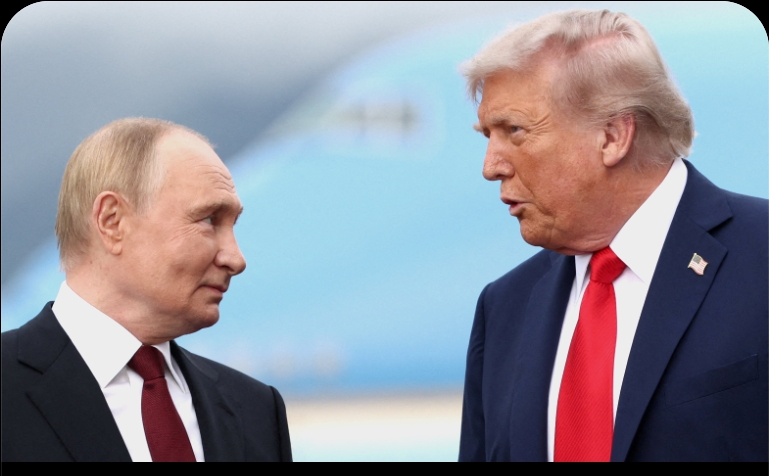
In an unexpected and controversial move, U.S. President Donald Trump and Russian President Vladimir Putin met in Anchorage, Alaska, on August 15, 2025—excluding Ukraine from the discussions despite its central stake in the conflict. The summit made headlines not for its outcomes, but for those conspicuously absent: Ukrainian leaders. This one-sided diplomatic exercise has sparked alarm in Kyiv, where officials warn that peace cannot—and should not—be brokered without Ukraine’s voice.
Ukrainian President Volodymyr Zelenskyy condemned the summit even before it began. He warned that any agreement made without Kyiv would be “stillborn” and “unworkable.” He insisted peace must be grounded in justice and respect for Ukraine’s sovereign right to decide its own future.
International Backlash and Solidarity
European leaders quickly rallied around Ukraine, issuing joint statements that echoed Zelenskyy’s position. British, French, German, Italian, Polish, Finnish leaders and the European Commission asserted that peace negotiations must include Ukraine—and made clear that there would be no Russian veto over Ukraine’s NATO or EU aspirations.
The broader European concern intensified, with groups like Weimar+ and a “Coalition of the Willing” forming in early 2025 to bolster Ukraine’s security and ensure it retains a seat at the peace negotiation table. These initiatives aimed to counterbalance unilateral U.S. and Russian efforts and uphold Ukraine’s agency in determining its fate.
Summit Outcomes: Vague Gestures and No Ceasefire
Despite the pomp—red-carpet reception, military flyovers—Trump and Putin emerged from their roughly 2.5-hour summit with no declared cease-fire or peace roadmap. Trump labeled the talks “very productive” but admitted substantial disagreements remain, while Putin emphasized the need to “turn the page” in U.S.–Russia relations.
Trump distanced himself from Ukraine’s central role in mediation, suggesting future talks would fall to Zelenskyy. European observers accused Trump of offering concessions to Putin without securing any meaningful gains for Ukraine.
Simultaneously, Russia’s military continued drone and missile strikes during the summit, reinforcing fears that diplomacy was sidelining the urgent humanitarian crisis.
Kyiv’s Perspective: Marginalization and Risk
In Kyiv, the fallout was immediate and deeply unsettling. Analysts and Ukrainians on the ground interpreted the summit’s dynamics as a stark warning—a reflection of waning U.S. commitment and a growing willingness to negotiate behind Ukraine’s back.
A former Ukrainian foreign minister, Dmytro Kuleba, echoed Zelenskyy’s sentiment, stating that peace is impossible if Kyiv is excluded. He emphasized that hastily imposed compromises risk granting legitimacy to Russia’s aggression.
Public reactions ranged from despair to defiance. As one Kyiv resident put it: “Any kind of deal would do just for us… but the Kremlin will not be stopped by any agreement they offer us.” Another likened the summit’s rationale to the pre-World War II Munich Agreement—decisions about Ukraine made without Ukraine’s input.
Strategic Implications for Peace
By sidelining Ukraine, the summit risks derailing a viable pathway to lasting peace. Experts warn that peace imposed without Ukraine’s agreement is inherently unstable. Without Kyiv’s participation, any decisions regarding territorial concessions or security guarantees lack legitimacy and may reignite conflict.
Moreover, Trump’s preference to leap directly to peace talks—despite the absence of a ceasefire—contravenes long-standing Ukrainian demands. Ukraine continues to insist on a ceasefire as the only viable starting point for consultations.
European and NATO officials stress that Ukraine must be empowered with a seat—not merely a subject—at the negotiation table. “Nothing about Ukraine without Ukraine” remains both the diplomatic ideal and moral imperative.
What’s Next: A Trilateral Rescue or Continued Stalemate?
In the wake of Alaska, Ukrainian President Zelenskyy is scheduled to meet with Trump in Washington—a move widely viewed as a chance to reassert Ukraine’s central role in any peace path. Zelenskyy welcomes renewed talks, conditional on preserving sanctions against Russia and ensuring Ukraine’s involvement in all peace decisions.
Additionally, Europe has ramped up efforts to craft structured security guarantees, economic support, and peacekeeping frameworks tailored to Ukraine’s needs—moves that could provide a counterbalance to U.S.–Russia sidelining.
Still, the geopolitical landscape remains fraught. The U.S.–Russia summit’s optics, with Ukraine conspicuously absent, may embolden Putin while deflating Kyiv’s leverage—unless Kyiv, backed firmly by Europe, succeeds in reclaiming its agency.
Conclusion: The Price of Exclusion
The Trump–Putin summit in Alaska may have projected diplomatic vitality, but at a critical cost. By excluding Ukraine from talks about its own future, leaders risk crafting an unstable peace predicated on imbalance and coerced concessions. As Zelensky, European allies, and civil society underline, peace without Ukraine at the table is not peace—it is peril. The coming weeks, especially Zelenskyy’s meeting in Washington and Europe’s mobilization of security coalitions, will test whether international diplomacy can correct course and center Ukraine where it belongs: at the heart of decisions about its fate