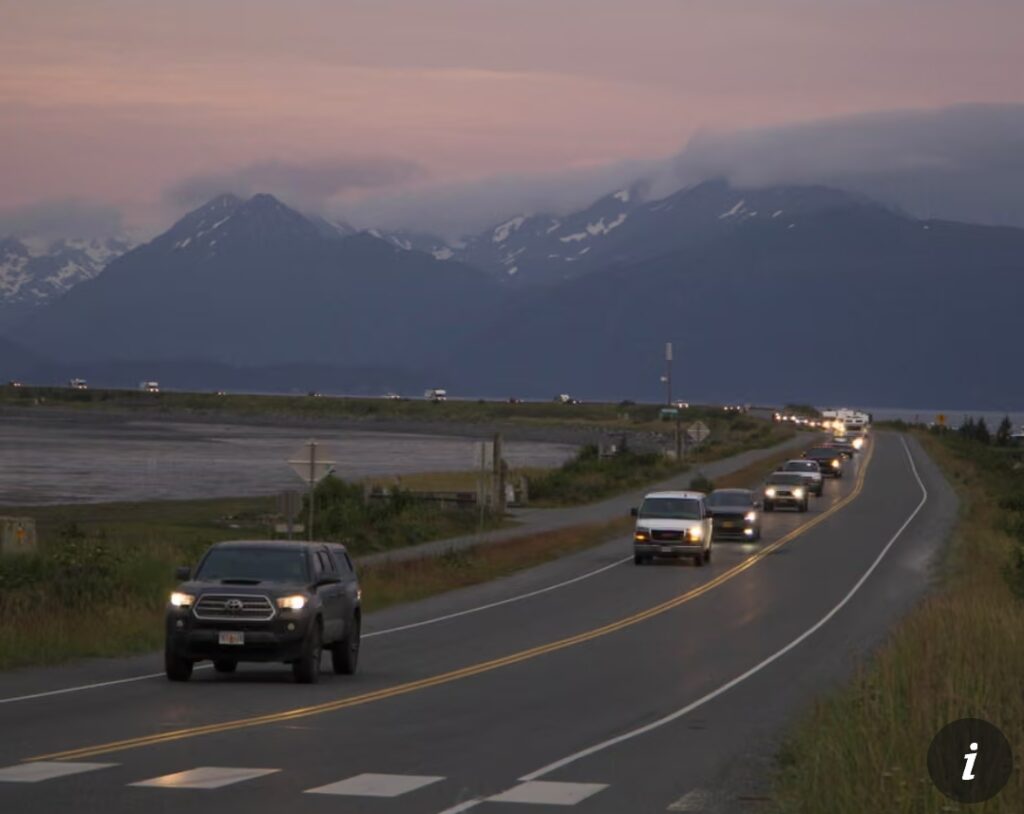
📰 Tsunami Advisory Issued — Then Canceled — After Magnitude 7.3 Earthquake Off Alaska Coast
Date: Wednesday, July 16, 2025
Location: Offshore near Sand Point and southern Alaska Peninsula
Earthquake Rattles Alaska’s Southern Coast
0-1At 12:37 p.m. local time on July 16, a powerful 7.3‑magnitude earthquake struck about 54 miles south of Sand Point, situated on Popof Island in the Aleutian chain . 601-0The U.S. Geological Survey confirmed the quake’s depth at approximately 12 miles (19 kilometers) .
723-0Tremors were felt widely—from Kodiak (population ~5,200) to as far away as Anchorage, nearly 600 miles (966 km) northeast . 880-0Sand Point, home to around 580 residents, reported at least 40 aftershocks in the first three hours .
Tsunami Alert, Advisory, and Cancellation
1005-0Immediately after the quake, the National Oceanic and Atmospheric Administration’s (NOAA) Tsunami Warning Center issued a tsunami warning for a 700‑mile stretch—from 40 miles southwest of Homer to Unimak Pass .
1309-0However, just over an hour later, this was downgraded to a tsunami advisory, urging residents to avoid water and seek higher ground . 1493-0By 2:45 p.m., the advisory was fully canceled, as seismic buoy data showed only a slight sea-level rise of 2–3 inches (5–8 cm) .
Evacuations & Impact Across Coastal Communities
Local officials mobilized evacuation procedures following the advisory:
1666-1Sand Point: Officials activated protocols and monitored for effects. Reports confirmed no major damage at the airport or harbor; the strongest sea swells were under 6 cm .
1995-0Unalaska (~4,100 residents): Authorities urged evacuation at least 50 ft (15 m) above sea level or moving 1 mile inland .
2163-0King Cove (~870 residents): Residents were ordered to higher ground .
2271-0Kodiak: Shelters stood by in schools; police warned residents to steer clear of inundation zones .
2408-0Seward: Videos show tourists evacuating uphill; friendly sirens blared “all clear” once conditions normalized .
Kodiak Coast Guard personnel were temporarily moved inland, and air crews were readied before being stood down .
Expert Insights: A Region on the Ring of Fire
2708-0Seismologists stress that the Gulf of Alaska lies along the Pacific “Ring of Fire”, a zone of frequent large earthquakes . 2924-0In fact, this July 16 quake marks the fifth magnitude-7+ earthquake in the same region since 2020 .
3047-0Dr. Michael West of the Alaska Earthquake Center remarked, “Something’s moving in this area… capable of larger earthquakes and earthquakes capable of significant tsunami damage” . 3247-0NOAA’s tsunami coordinator noted that shallow quakes tend to generate larger waves—but fortunately, the current event “was in shallow water” and did not indicate an extensive tsunami .
Historical Perspective
Alaska has a long history with powerful quakes and deadly tsunamis:
3468-1In 1964, a magnitude‑9.2 quake in Prince William Sound triggered a tsunami that killed over 250 people, particularly devastating Anchorage .
3756-0In 1958, a megatsunami up to 524 m high struck Lituya Bay following a magnitude‑7.8–8.3 quake .
3882-0In 2018, a magnitude‑7.9 Gulf of Alaska quake triggered minor waves—under 8 inches at Kodiak .
Final Word: Stay Alert, But Not Alarmed
Although this quake triggered regional alarms and precautionary evacuations, no significant damage or injuries have been reported. Coastal infrastructures like harbors and airports appear intact.
Nonetheless, officials emphasize that Alaskans must remain vigilant. As communities along the Ring of Fire, preparedness measures are crucial. Ongoing monitoring by NOAA tsunami buoys and the Alaska Earthquake Center remains active—and early warning systems continue to protect coastal populations.
Leave a Reply