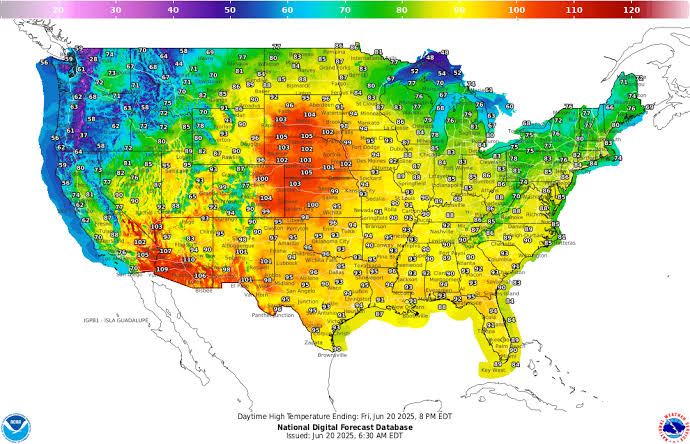

Restored: The “Second Heatwave” of 2025 in the U.S.
Early Wildfire: First Heat Event (May – june)
In mid-May 2025,
the U.S. experienced an unusually early-season heatwave, particularly intense in Texas and Minnesota. Del Rio reached 109 °F and San Antonio hit 102 °F, while International Falls, Minnesota, recorded 96 °F—marking historic daily highs.
This heat wave already pushed spring temperatures higher than typical, indicating a trend toward earlier and more intense summer-like heat.
The Second Heatwave (Summer: June–August)
Underlying Conditions & Forecast
NOAA projected above-average summer temperatures across nearly the entire U.S., with the West, Southwest, Gulf Coast, Florida, and Northeast expected to endure prolonged heat waves.
The summer of 2025 is poised to be among the hottest on record, with NOAA giving it a 39% chance of being the second-warmest year in U.S. history, and a 99% chance of ranking within the top five.
Heat Dome and Persistent High Heat
A powerful heat dome formed over the U.S., initially impacting the Midwest and eastern regions, with temperatures surpassing 105 °F (40 °C) and overnight lows staying above 75 °F (24 °C).
NOAA’s satellites observed this heat dome’s persistence, noting its spread across the Midwest, Ohio Valley, and up into the Northeast through late June.
Scope & Climate Attribution
From July 21 to 25, a particularly relentless surge of heat and humidity gripped large swaths of the country—affecting nearly 160 million people, or nearly half the U.S. population. Climate change made this extreme heat at least three times more likely.
Impacts and Responses
Health & Infrastructure Threats
Across the central and eastern U.S., cities like Chicago, Kansas City, St. Louis, Detroit, Cincinnati, Pittsburgh, Washington D.C., New York City, and more were under extreme heat alerts, with heat indices climbing to 115 °F (46 °C).
In New York, the governor declared a state of emergency as the heatwave threatened to shatter records dating back 125 years.
The heat strained power systems—Con Edison in New York City reduced voltage by 8%, and other parts of the East Coast and Midwest reported widespread outages.
Over 130 million Americans across 11 states faced extreme heat, leading to warnings about rising electricity bills, especially for New Yorkers.
Climate Trends & System Stress
Heat-related deaths and illnesses surged. Texas saw early records broken, highlighting an earlier and intensified onset of summer heat that stresses public health systems.
Infrastructure and emergency response capacities were stretched thin due to staffing and funding reductions at federal agencies amid growing demands for heat resilience.
Summary: 2025 U.S. Second Heatwave at a Glance
Phase Dates/Period Highlights
First Heatwave Mid-May Record-breaking temperatures in Texas and Minnesota
Major Summer Heat June–July Nationwide heat dome, extended heat, high minimum temps
Climax Period July 21–25 Heat affecting 160M people; climate made it ~3× more likely
Impacts & Responses June–July States of emergency; power strain; energy price hikes
What’s Next?
Public Health Efforts: Authorities should prioritize cooling centers, hydration campaigns, and outreach to vulnerable populations.
Infrastructure Upgrades: Strengthening power grids and investing in resilient urban design is critical.
Policy & Climate Action: This year’s events underscore the urgent need for climate adaptation strategies and strong federal support.
Leave a Reply